
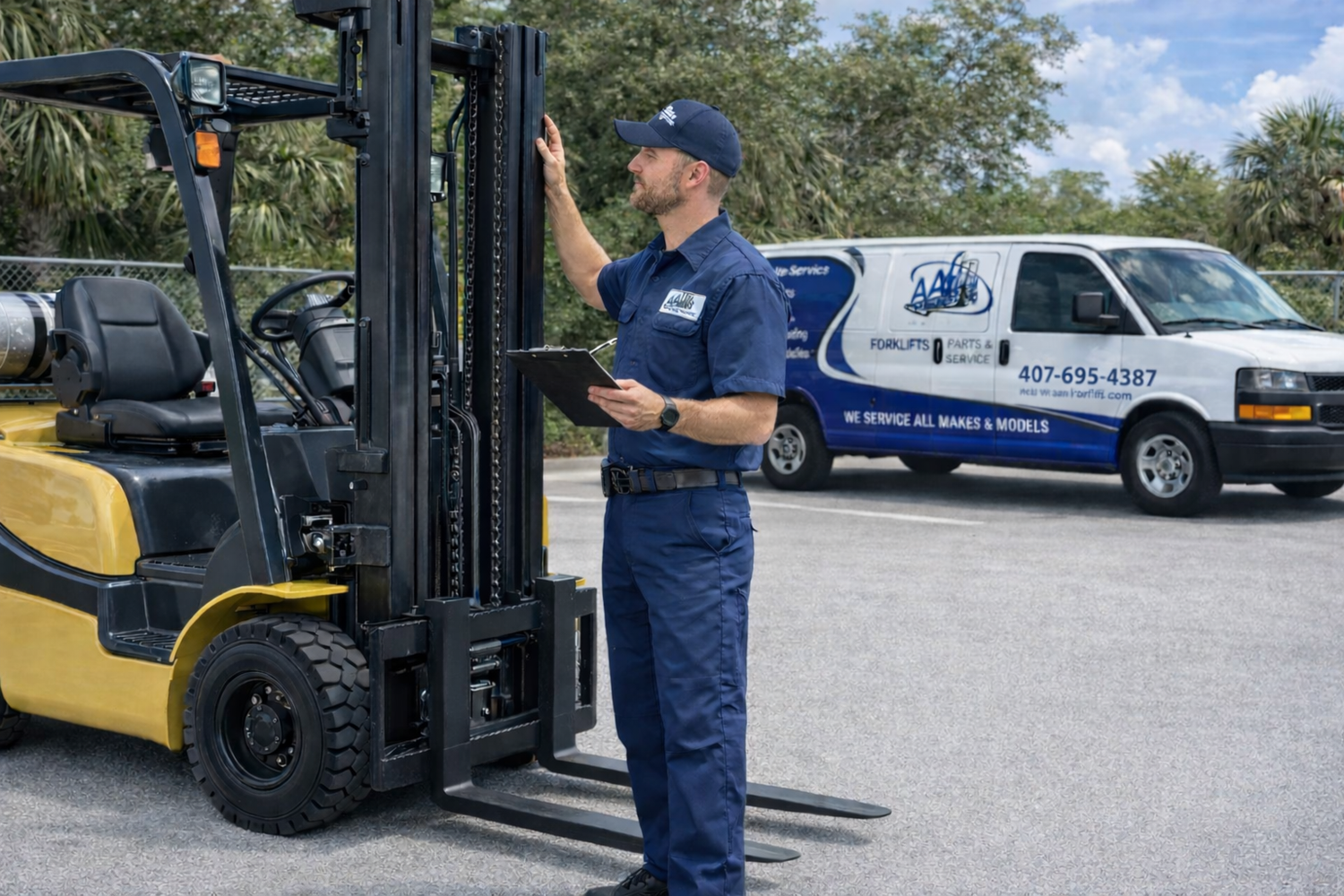
Why the Right Refurbished Forklift Matters More Than the Price Tag
A service-backed guide to smarter forklift investments
If you’re comparing refurbished forklifts vs. used forklift listings, the real question isn’t how good the photos look. It’s this: Will the forklift run reliably under load, day after day, without turning into a downtime machine?
This guide breaks down what “refurbished” should actually mean, what to check before you buy, and how planned maintenance + hydraulic support protect your investment long-term.
- Lower upfront cost than new (with managed risk)
- Focus on hydraulic and mechanical reliability
- Post-purchase maintenance and repair support
- Test equipment through rentals before committing
Need help choosing the right forklift fast?
Avoid buying the wrong capacity, mast height, or fuel type. Tell us your application and we’ll help you narrow down the best fit.
Get a RecommendationWant to validate performance before you buy?
Rentals are the smartest way to confirm capacity, handling, and fit in your actual workflow—before you commit.
See Forklift RentalsWhat Is a Refurbished Forklift?
A refurbished forklift is a previously owned lift truck that has been evaluated through a structured inspection process and restored to dependable operating condition through repairs, part replacement where needed, and functional testing. In other words, refurbishment should focus on mechanical reliability and safe performance—not just cosmetic cleanup.
The reason this matters is simple: a forklift can look “fine” in photos and still fail under real workloads. True refurbishment targets the systems that determine uptime—hydraulics, steering, brakes, mast function, and key controls—so the equipment performs predictably in your operation.
How to think about “refurbished” the right way
“Refurbished” should mean the forklift was inspected with the intent to reduce breakdown risk and improve operational consistency. If the process doesn’t address high-failure systems (especially hydraulics), it’s often just a used forklift with a nicer presentation.
Our Service-Backed Refurbishment Checklist
Hydraulic System Analysis
We look for leaks, drift, inconsistent lift/tilt behavior, and performance loss under load—because hydraulics are one of the fastest ways “cheap” becomes expensive.
Mechanical & Safety Inspection
Brakes, steering, mast chains, forks, and frame integrity are evaluated for wear, predictable handling, and safe operation.
Controls & Operational Checks
We verify that the forklift responds consistently to operator inputs so you don’t end up with “intermittent” issues that kill productivity.
Functional Testing
The forklift is operated through typical work cycles to confirm stable mast function, lift speed, tilt response, and overall workability.
Refurbished vs Used Forklifts: Why the Difference Matters
A used forklift listing is usually a snapshot: model, hours, capacity, and a condition description. The problem is that many expensive issues aren’t obvious until the forklift is warmed up, placed under load, or operated through a full shift. That’s where buyers get hit with the most common outcome: unplanned downtime + repair bills.
Refurbished forklifts are different because the goal is to reduce mechanical risk before the forklift enters your operation. That includes inspecting wear points, validating function under realistic conditions, and addressing issues that can turn into costly failures. This is exactly why a service-backed approach outperforms marketplaces in buyer satisfaction: buyers don’t just want inventory—they want reliability.
| Decision Factor | Standard Used Listing | Service-Backed Refurbished Forklift |
|---|---|---|
| Inspection depth | Varies widely; often limited | Structured inspection focused on uptime systems |
| Hydraulic risk | May not be fully evaluated | Hydraulics treated as a core reliability priority |
| Predictable performance | Hard to confirm from photos/listings | Testing + repairs improve consistency in real use |
| Post-purchase support | Usually minimal | Maintenance + repair support path is available |
| Downtime exposure | Higher (hidden issues show up later) | Lower (risk reduced before delivery) |
Are Refurbished Forklifts Reliable?
Yes—when refurbishment is performed by experienced technicians, refurbished forklifts can be highly reliable. Reliability isn’t determined only by the year on the data plate; it’s determined by the condition of the forklift’s working systems. Brakes, steering components, mast function, and control systems matter every day. Hydraulics matter every minute.
The reason hydraulics deserve extra attention is that many “it still works” forklifts are operating with small, escalating hydraulic issues. Tiny leaks, slow drift, heat-related thinning, and inconsistent lift/tilt behavior often start as minor symptoms and end as expensive downtime. If you want reliable refurbished equipment, the support plan matters—especially planned maintenance service that catches wear before it becomes failure.
Hydraulics
Hydraulics drive lifting, tilting, and control stability. Long-term reliability improves when the forklift has access to real hydraulic support like hydraulic cylinder rebuilds and hydraulic pump rebuilds.
Preventive Maintenance
Refurbished forklifts perform best when they follow a consistent cadence for fluids, filters, wear points, and safety checks. That’s why a real maintenance plan is what keeps “refurbished” from turning into a gamble.
Application Fit
The right capacity, mast height, tire type, and fuel choice matter. A forklift that’s “close enough” can run hotter, wear faster, and create handling issues that show up as downtime.
How Long Do Refurbished Forklifts Last?
A professionally refurbished forklift can deliver years of service life, but the exact lifespan depends on how it is used and how it is maintained. Single-shift indoor operations typically see less stress than multi-shift work or outdoor environments. Load intensity and operator behavior also impact wear.
The practical takeaway is this: refurbished forklifts last longer when maintenance isn’t reactive. Small issues handled early prevent big failures later. That’s why a service-backed buyer path matters—especially if your operation depends on consistent lifting performance and safe handling under load.
If your forklift ever shows symptoms like slow lifting, inconsistent tilt speed, unusual noises under load, or intermittent loss of lifting power, it may be time to evaluate hydraulic health. Those are the moments when hydraulic cylinder rebuilds or hydraulic pump rebuilds can restore performance and prevent a much larger failure.
Cost Comparison: Refurbished vs New Forklifts
For most buyers, the value of refurbished forklifts comes down to a smarter cost-to-uptime ratio. New forklifts are excellent equipment, but the upfront cost is often more than many growing businesses need to spend to reach their operational goals. Refurbished equipment can help you preserve capital while still achieving dependable lifting performance.
The best buying decision usually comes from matching the forklift to the workload, then protecting that investment with a maintenance plan. If you’re comparing pricing, don’t compare only the initial purchase number. Compare expected downtime, repair exposure, and support availability over time.
Avoid the “cheap forklift” trap
The most expensive forklift is often the one that stops working in the middle of a shift. If you want real value, prioritize refurbishment quality, service support, and a maintenance plan that keeps the forklift consistent.
Safety, Inspections, and Compliance
Safety isn’t a marketing line—it’s a daily operational requirement. Refurbished forklifts should be evaluated for braking performance, steering response, mast function, hydraulic integrity, operator controls, and overall stability. A forklift that “runs” is not the same as a forklift that is safe and predictable under load.
A strong refurbishment process focuses on functional safety checks and testing. Beyond purchase, ongoing planned maintenance service helps keep performance consistent and reduces the risk of preventable failures that can become safety incidents.
Warranty and Service Support: The Real Advantage
Marketplace pages can list equipment, but they rarely solve the real problem: what happens after the purchase. A service-backed approach means you have a path for diagnostics, maintenance, and hydraulic support when performance changes.
When you have a forklift issue, you don’t want to start searching for “who can fix this” after the breakdown. You want the support plan built in from the start—especially if uptime is tied to your revenue.
Try Before You Buy: A Smarter Way to Invest
If you’re unsure about capacity, aisle requirements, mast height, or operator preference, the most practical approach is often testing equipment in real conditions. Forklift rentals let you validate performance before making a long-term investment, which can prevent costly mismatches.
Rentals are also useful when your operation has seasonal demand spikes or temporary projects. Even if you plan to buy, a rental window can help confirm what “right fit” actually looks like for your workflow.
Local Support in Orlando and North Carolina
Buying a refurbished forklift is easier when you know service support is available where you operate. Our website supports customers through local service pathways in Orlando and across North Carolina. That local support matters when you need maintenance, repairs, or guidance on keeping equipment consistent.
If your goal is to minimize downtime and keep your forklift productive, your purchase decision should connect to a support plan. That’s the difference between buying a forklift and investing in an uptime system.
Refurbished Forklifts FAQ
What is a refurbished forklift?
A refurbished forklift is a used forklift that has been inspected, repaired, and tested to restore dependable performance. True refurbishment focuses on reliability and safe operation—not just appearance.
Are refurbished forklifts reliable?
Yes—when the refurbishment process addresses high-failure systems and the forklift is supported with ongoing maintenance. For long-term uptime, start with planned maintenance service.
Is refurbished better than used?
Refurbished is often better than a standard used listing because refurbishment is intended to reduce hidden mechanical risk before the forklift enters your operation, lowering downtime exposure and surprise repair costs.
What should I check before buying a refurbished forklift?
Confirm inspection depth and functional testing, and make sure the forklift fits your workload (capacity, mast height, tire type, fuel type). Also confirm you have a realistic plan for maintenance and service support.
Why do hydraulics matter so much on a refurbished forklift?
Hydraulics control lift and tilt behavior and are a common source of downtime when issues are ignored. If performance changes occur, services like hydraulic cylinder rebuilds and hydraulic pump rebuilds can restore consistent operation.
Can I rent a forklift before deciding to buy?
Yes—many businesses use rentals to confirm performance and fit before committing. Explore forklift rentals to test capacity, handling, and operator comfort in real conditions.
Ready to Reduce Downtime With a Refurbished Forklift?
Mention this guide when you contact us and get $500 off a qualifying forklift purchase. We’ll help you choose the right unit and protect it with a service-backed plan.
Must mention this guide during your initial consultation. Offer valid for qualifying purchases.
Questions? Call (407) 695-4387

Leave a comment
This site is protected by hCaptcha and the hCaptcha Privacy Policy and Terms of Service apply.