
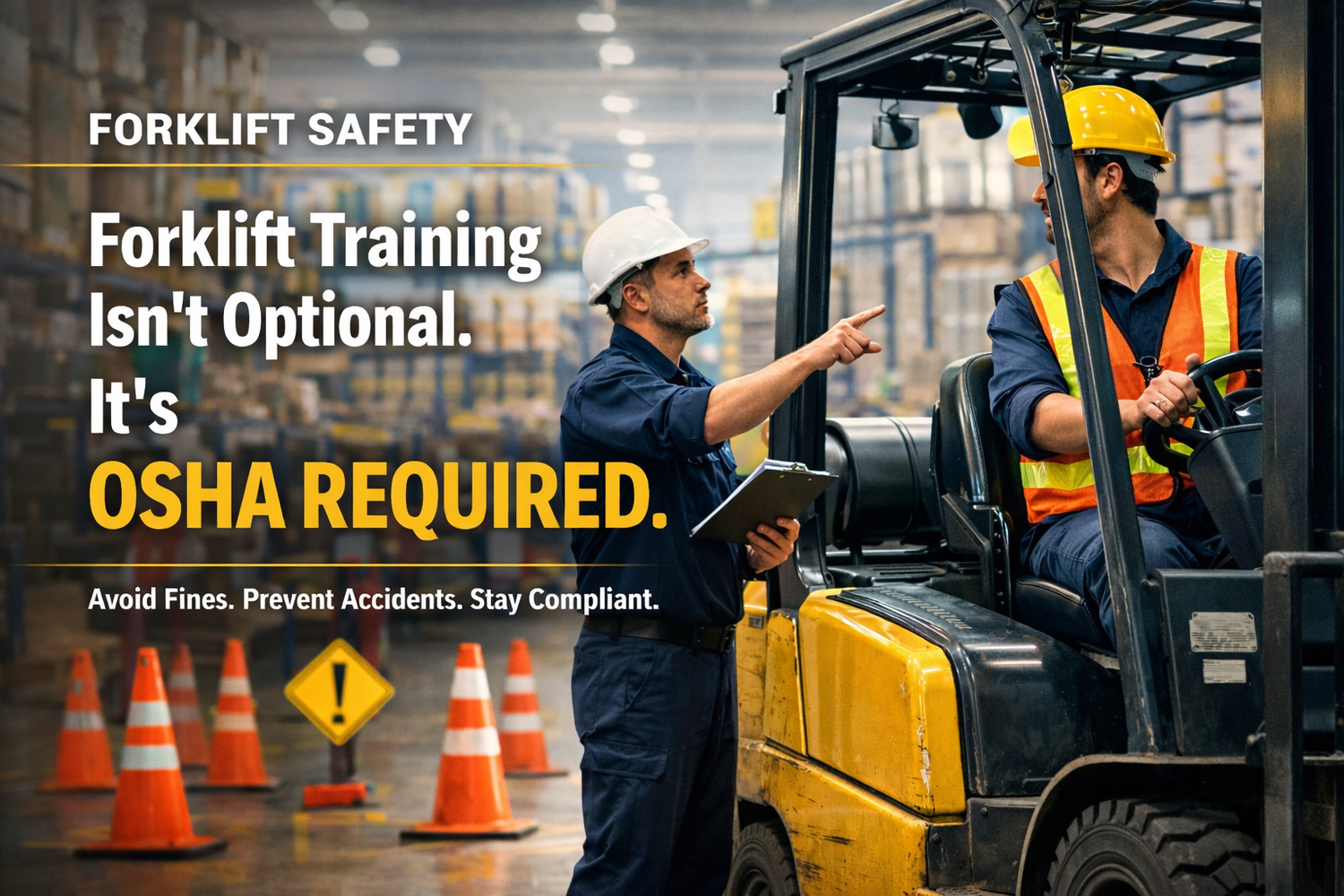
Forklift safety is a critical concern for every warehouse, manufacturing facility, and distribution center across Florida and North Carolina. With OSHA reporting that forklifts are involved in approximately 85 fatal accidents and 34,900 serious injuries annually, proper training and safety protocols are not just regulatory requirements—they're essential for protecting your workforce and maintaining operational efficiency.
Quick Answer: OSHA requires comprehensive forklift operator training that includes formal instruction, practical training, and performance evaluation. Operators must be certified before operating equipment and receive refresher training every three years or when incidents occur. Training must cover pre-operation inspections, safe operating procedures, load handling, and workplace-specific hazards.
Understanding OSHA Forklift Safety Standards
OSHA's forklift safety requirements are outlined in 29 CFR 1910.178, which establishes comprehensive standards for powered industrial truck operation. These regulations apply to all workplaces where forklifts are used and require employers to ensure that operators receive proper training before being allowed to operate equipment independently.
The standard covers various types of powered industrial trucks, including electric motor rider trucks, internal combustion engine trucks, and rough terrain forklifts. Each type has specific safety considerations that must be addressed during training and daily operations.
Key Components of OSHA Compliance
OSHA compliance for forklift operations requires multiple elements working together. Employers must provide adequate training, ensure proper equipment maintenance, establish safe operating procedures, and maintain ongoing oversight of forklift operations. This comprehensive approach helps prevent accidents and protects both operators and other workers in the facility.
Regular equipment inspections are equally important as operator training. Planned maintenance programs help ensure that safety systems function properly and reduce the risk of equipment-related accidents.
Required Training Components
OSHA mandates that forklift operator training must include three essential components: formal instruction, practical training, and performance evaluation. Each component plays a critical role in ensuring operators understand both the theoretical knowledge and practical skills needed for safe operation.
Formal Instruction Requirements
Formal instruction covers the fundamental knowledge that operators need before touching any equipment. This classroom-style training must address specific topics mandated by OSHA, ensuring operators understand the principles of safe forklift operation before moving to hands-on training.
- Operating instructions, warnings, and precautions for the specific types of trucks being used
- Differences between forklifts and automobiles in terms of stability and handling
- Truck controls and instrumentation locations and functions
- Engine or motor operation principles
- Steering and maneuvering techniques
- Visibility limitations and how to compensate for them
- Fork and attachment adaptation, operation, and use limitations
- Vehicle capacity and stability principles
- Hazardous surface conditions and how to navigate them safely
Practical Training Elements
Practical training allows operators to apply their classroom knowledge in real-world scenarios under supervision. This hands-on component must be conducted in the actual workplace where the operator will be working, using the same type of equipment and encountering the same conditions they'll face during regular operations.
Critical Practical Training Topics:
- Pre-operation inspection procedures and safety checks
- Operating the truck in the workplace environment
- Load manipulation, stacking, and unstacking techniques
- Parking and securing the vehicle properly
- Charging or fueling procedures and safety protocols
- Navigating specific workplace hazards and traffic patterns
Pre-Operation Inspection and Daily Safety Checks
Daily pre-operation inspections are fundamental to forklift safety and OSHA compliance. These inspections help identify potential problems before they become safety hazards, ensuring that equipment operates safely throughout each shift. Operators must be trained to perform these inspections systematically and understand what to look for.
The inspection process should follow a consistent checklist approach, covering all critical systems and components. When problems are identified, operators must know the proper procedures for reporting issues and ensuring that defective equipment is removed from service until repairs are completed.
Essential Daily Inspection Items
- Visual Inspection: Check for fluid leaks, damaged parts, loose components, and proper tire condition
- Safety Systems: Test warning devices, lights, horn, and backup alarms
- Control Functions: Verify proper operation of steering, brakes, and lifting mechanisms
- Hydraulic Systems: Check fluid levels and inspect hoses for damage or wear
- Battery or Fuel: Ensure adequate charge or fuel levels and proper connections
- Forks and Attachments: Inspect for cracks, wear, and proper positioning
When hydraulic issues are discovered during inspections, immediate attention is crucial for safety. Professional hydraulic system service ensures that these critical components function safely and reliably.
Why AAA Forklifts Supports Your Safety Program:
AAA Forklifts provides comprehensive support for your forklift safety program throughout Florida and North Carolina. Our experienced technicians understand OSHA requirements and help ensure your equipment meets all safety standards. From preventive maintenance to emergency repairs, we keep your fleet operating safely and efficiently, reducing downtime and supporting your compliance efforts.
Load Handling and Stability Principles
Understanding forklift stability is crucial for safe operation and accident prevention. Unlike automobiles, forklifts operate on a stability triangle principle, where the vehicle's center of gravity must remain within specific boundaries to prevent tipping. Training must thoroughly cover these concepts to help operators understand how their actions affect stability.
Load characteristics significantly impact forklift stability and handling. Operators must understand how load weight, size, shape, and position affect the vehicle's center of gravity and operational capabilities. This knowledge is essential for safe load handling in various workplace environments.
Critical Stability Factors
- Load weight must never exceed the forklift's rated capacity at the load center
- Load position affects stability - keep loads close to the mast and low when traveling
- Turning with elevated loads increases tip-over risk significantly
- Uneven surfaces and inclines require extra caution and reduced speeds
- Sudden movements can destabilize the vehicle even with light loads
- Attachment weight affects capacity and must be calculated into load limits
Safe Operating Techniques
Proper operating techniques are fundamental to preventing accidents and maintaining productivity. Operators must develop consistent habits that prioritize safety while accomplishing work tasks efficiently. These techniques should become second nature through proper training and regular practice.
- Always travel with forks lowered and tilted back slightly
- Look in the direction of travel and maintain clear sight lines
- Use spotters when visibility is compromised
- Maintain safe following distances and operating speeds
- Come to complete stops before changing direction
- Never attempt to pick up loads exceeding capacity ratings
Workplace-Specific Hazards and Safety Protocols
Every workplace presents unique hazards that must be addressed in forklift safety training. OSHA requires that training include workplace-specific hazards and the safety measures needed to address them. This customized approach ensures that operators understand the particular risks they'll encounter in their work environment.
Common workplace hazards include pedestrian traffic, narrow aisles, loading docks, ramps, overhead obstructions, and hazardous materials. Each of these situations requires specific safety protocols and operating procedures to prevent accidents and maintain safe working conditions.
Managing Pedestrian Safety
Pedestrian safety is one of the most critical aspects of forklift operations in busy warehouses and manufacturing facilities. Establishing clear traffic patterns, designated walkways, and communication protocols helps prevent accidents between forklifts and pedestrians. Training must emphasize the operator's responsibility for maintaining awareness of pedestrian activity.
Certification, Documentation, and Ongoing Compliance
OSHA requires employers to certify that operators have received proper training and demonstrate competency before allowing independent operation. This certification must include the operator's name, training completion dates, trainer identity, and evaluation results. Proper documentation protects both employers and operators while demonstrating compliance during inspections.
Refresher training is required every three years or when specific triggering events occur, such as accidents, near misses, or performance deficiencies. Additionally, operators must receive training when assigned to different equipment types or when workplace conditions change significantly.
Training Documentation Requirements
- Training completion certificates with operator and trainer signatures
- Performance evaluation records demonstrating competency
- Training content documentation showing OSHA compliance
- Refresher training schedules and completion records
- Incident reports and any additional training provided
Maintaining adequate equipment through regular service and repairs supports safety training efforts. When operators work with well-maintained equipment, they can focus on safe operating practices rather than compensating for equipment problems. Professional forklift services help ensure your equipment supports your safety program effectively.
Frequently Asked Questions
How often is forklift safety training required by OSHA?
Who can provide OSHA-compliant forklift training?
What documentation is required for forklift operator certification?
Can forklift operators work in different facilities with the same certification?
What happens if an accident occurs with an untrained operator?
How does equipment condition affect forklift safety training?
Need Help From AAA Forklifts?
Whether you need forklift service, hydraulic repair, preventive maintenance, rentals, parts support, or help choosing the right equipment, AAA Forklifts helps businesses in Florida and North Carolina stay productive and reduce downtime.
Call Orlando at (407) 695-4387

Leave a comment
This site is protected by hCaptcha and the hCaptcha Privacy Policy and Terms of Service apply.