
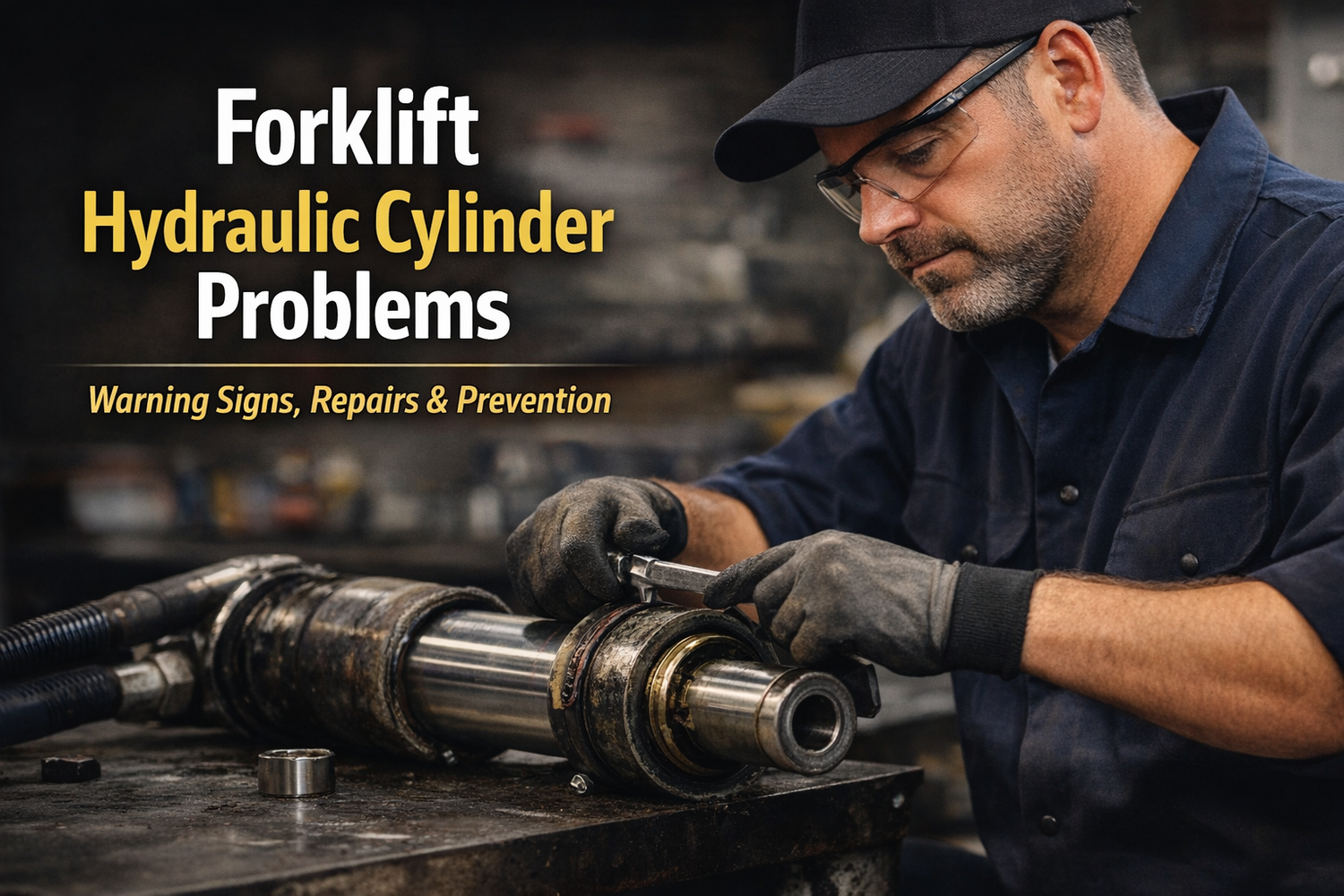
Forklift Hydraulic Cylinder Problems: Warning Signs, Repairs, and Cost — overview
Forklift hydraulic cylinders are one of the most important components in a forklift's lifting system. These heavy-duty hydraulic parts allow forklifts to raise loads, control mast movement, and perform precise material handling tasks every day in warehouses, manufacturing plants, shipping centers, job sites, and storage yards.
When the cylinder is working properly, the forklift feels strong, responsive, and reliable. When the cylinder begins to fail, even small tasks can become slower, riskier, and more expensive.
The Hidden Cost of Delayed Repairs:
A hydraulic cylinder problem often starts quietly. Operators may notice the mast feels slower than normal, the forklift does not lift as smoothly, or a small amount of oil begins appearing around the rod or underneath the machine. At first, those symptoms may seem minor. The forklift may still work, and the temptation is often to keep using it until the issue becomes more obvious. Unfortunately, that is exactly how a manageable hydraulic repair can turn into a more serious failure.
Hydraulic systems operate under pressure, and that pressure has to remain controlled for the forklift to perform safely. Once seals wear out, hoses weaken, or contamination enters the system, the cylinder can lose efficiency and start causing problems elsewhere. Reduced lifting performance can affect productivity. Leaks can create safety and housekeeping issues. Ongoing pressure loss can place extra strain on pumps, valves, and related hydraulic components.
In this guide:
|
• What a hydraulic cylinder does
|
• 8 common failure signs
|
• Why cylinders start leaking
|
|
• Repair vs replacement
|
• Cost factors
|
• Prevention strategies
|
In this guide, we explain what a forklift hydraulic cylinder does, the most common signs of failure, why cylinders start leaking, how hose issues can affect cylinder performance, when repair makes more sense than replacement, and what businesses can do to prevent hydraulic problems before they lead to major downtime.
What a Forklift Hydraulic Cylinder Does
A forklift hydraulic cylinder converts hydraulic pressure into mechanical force. Inside the cylinder, pressurized hydraulic fluid pushes against a piston. That piston moves a rod, and the rod creates the motion needed to raise or tilt the mast. This is what gives the forklift its lifting power and the controlled movement operators rely on when handling pallets, equipment, building materials, and other loads.
Most forklifts use more than one hydraulic cylinder:
- Lift cylinders – Raise and lower the mast
- Tilt cylinders – Change the mast angle for secure load positioning
- Auxiliary cylinders – Power clamps, side shifters, and attachments
Because these parts work together, a hydraulic issue in one area can affect the overall performance of the machine.
When a cylinder is in good condition, it can hold pressure, move smoothly, and operate consistently through repeated lift cycles. When wear develops, the forklift may still function, but it often becomes less efficient and less predictable. That is why hydraulic cylinder health matters so much. It is not just about whether the forklift lifts or does not lift. It is about control, consistency, safety, and protecting the larger hydraulic system from added wear.
Common Signs of Hydraulic Cylinder Failure
Hydraulic cylinder failure usually develops gradually rather than happening all at once. In many cases, the earliest warning signs are subtle. Operators may notice that the machine is not lifting as quickly as it used to, or the mast seems to drift slightly after the load is raised. In other cases, the most visible sign is fluid collecting around the rod or under the forklift.
|
Performance Issues
|
Physical Signs
|
These symptoms often point to worn seals, internal cylinder wear, rod damage, contamination, or pressure loss elsewhere in the system. Even if the forklift is still operating, these warning signs should not be ignored. A machine that still lifts but leaks fluid or drifts under load is already telling you that something is wrong.
⚠️ A Common Mistake to Avoid
One of the biggest mistakes businesses make is treating small hydraulic symptoms as normal aging instead of as early warning signs. A small leak today can become a larger leak tomorrow. Slow mast response can become real lifting weakness. Internal wear can spread, and the cost of repair can increase the longer the problem is allowed to continue.

Why Forklift Hydraulic Cylinders Start Leaking
Hydraulic leaks are one of the most common forklift hydraulic problems. In many cases, the leak begins with seal wear. Hydraulic seals are designed to keep fluid contained while allowing the rod and piston to move under pressure. Over time, heat, friction, contamination, and repeated cycling break those seals down. Once the seal surfaces wear out, fluid begins escaping and the cylinder starts losing efficiency.
Primary causes of cylinder leaks:
- Seal wear – Normal degradation from pressure and heat
- Rod damage – Scratches, pitting, or scoring damage seals
- Contamination – Dirt and debris accelerate internal wear
- Operating conditions – Harsh environments increase failure rates
Rod damage is another common cause of leaks. If the rod becomes scratched, pitted, bent, or scored, it can damage seals and create a path for hydraulic fluid to escape. A damaged rod can also wear new seals prematurely, which means simply replacing seals without addressing rod condition may not fully solve the problem.
Contamination is a major factor as well. Dirt, debris, water, or metal particles in hydraulic fluid can damage internal components and accelerate wear. Once contamination circulates through the system, it can affect seals, cylinders, valves, pumps, and other hydraulic parts. That is why clean fluid and regular inspection matter so much.
Age and operating conditions also play a role. Forklifts working in harsh environments, high-cycle operations, outdoor conditions, or dusty settings often experience faster hydraulic wear than machines used lightly in cleaner indoor spaces. The harder the system works, the more important regular service becomes.
What Happens When Leaks Are Ignored
A leaking cylinder is not just an isolated annoyance. It affects performance, safety, and maintenance costs. As hydraulic fluid escapes, the cylinder may lose the ability to hold pressure properly. That can lead to weak lifting, inconsistent mast control, and drifting loads. Those symptoms can affect operator confidence and reduce productivity, especially in busy work environments where equipment reliability matters every hour of the day.
|
Performance
Weak lifting, drifting loads, slower cycles
|
Safety
Oil on floors, unpredictable mast movement
|
Costs
Fluid loss, component damage, downtime
|
Leaks can also create safety and housekeeping concerns. Hydraulic oil on the floor increases the risk of slips, while oil residue on the machine can attract dirt and make inspection more difficult. If the leak worsens significantly, the forklift may become unreliable for daily operations and could require unscheduled downtime at the worst possible moment.
Ignoring leaks may also allow damage to spread into other parts of the hydraulic system. Pumps may work harder to maintain pressure. Hoses and fittings may be stressed by pressure imbalances. Contamination may move farther through the system. What begins as a seal issue can eventually become a broader hydraulic repair problem.
How Hose Problems Can Affect Cylinder Performance
Hydraulic cylinders do not work in isolation. They depend on a complete hydraulic system that includes hoses, fittings, pumps, valves, and fluid. If one of those related components begins to fail, the cylinder may be one of the first places where the problem becomes visible.
For example, a worn or leaking hose can reduce system pressure and make the forklift feel weak or inconsistent. A loose fitting can allow small leaks or air intrusion. Cracked hose surfaces can worsen over time and eventually fail under pressure. Contamination introduced through deteriorating hose connections can circulate through the system and damage seals or internal hydraulic surfaces.
That is why a cylinder issue is not always just a cylinder issue. Sometimes the visible leak at the cylinder is only part of the story. The full system should be inspected so the actual source of the problem can be identified and corrected.

A leaking or deteriorating hose should be addressed quickly. Routine inspections help catch hose damage before it affects cylinders, pumps, or valves and before the forklift experiences bigger performance issues.

Clean, properly fitted hoses are essential to hydraulic reliability. Even when a hose looks acceptable from a distance, close inspection may reveal wear, hardening, cracking, abrasion, or fitting issues that should be corrected before they turn into a failure.
Hydraulic Cylinder Repair vs Replacement
Many forklift owners assume that once a hydraulic cylinder starts leaking, replacement is the only option. In reality, many forklift cylinders can be professionally rebuilt. Rebuilding often includes disassembly, inspection of the rod and barrel, replacement of worn seals, cleaning of internal parts, and pressure testing after reassembly.
|
Factor
Cost
Turnaround
Best for
|
Repair / Rebuild
30-50% of replacement cost
1-3 days typical
Minor to moderate wear, seal failure
|
Full Replacement
Full component cost
Varies by availability
Severe rod damage, barrel damage, bending
|
When the major structural components of the cylinder are still in usable condition, rebuilding is often the most practical and cost-effective solution. It restores performance without the higher price of full component replacement and can extend the service life of the original cylinder significantly.
Replacement may be necessary when there is severe rod scoring, barrel damage, bending, corrosion, or other structural wear that makes rebuilding impractical. The right approach depends on the condition of the cylinder, the severity of the failure, and the overall condition of the hydraulic system.
This is why proper diagnosis matters. Replacing a cylinder when a rebuild would have worked can mean spending more than necessary. Rebuilding a cylinder with major structural damage can also be the wrong move. A qualified inspection helps determine the best path based on performance, reliability, and cost.
Typical Hydraulic Cylinder Repair Costs
Repair costs vary depending on the type of forklift, the cylinder size, the extent of the damage, and whether other hydraulic components are involved. Minor seal-related repairs are usually far less expensive than replacing an entire cylinder assembly, especially when the issue is identified early.
|
Minor seal repair
$200–600
|
Full rebuild including inspection
$400–1,200
|
Rod re-chroming
Add $150–400
|
New cylinder replacement
$800–3,000+
|
Costs rise when damage extends beyond the seals to include rod repair, re-chroming, barrel damage, hose replacement, or contamination-related service. If a business continues operating equipment with an active hydraulic problem, the final repair bill often ends up higher because more than one component is affected by the time service is scheduled.
In practical terms, the best way to control hydraulic repair costs is early action. The sooner a leak, drift issue, or lifting problem is inspected, the better the chance of keeping the repair focused and manageable.
Why Preventive Maintenance Matters
Preventive maintenance is one of the most effective ways to avoid forklift hydraulic breakdowns. Instead of waiting for a visible leak or loss of performance, planned service focuses on identifying wear before it turns into downtime.
A proper hydraulic inspection may include checking hoses for abrasion or cracking, inspecting rods for damage, looking for fluid seepage around seals, confirming proper fluid condition, and testing system pressure. These checks help identify both obvious and hidden issues that could affect cylinder performance.
Preventive maintenance also supports broader equipment reliability. A forklift with a healthy hydraulic system is easier to operate, more predictable under load, and less likely to cause interruptions during busy work periods. For companies relying on forklifts every day, that reliability is just as valuable as the repair savings.
Preventing Hydraulic Cylinder Failure
Preventing hydraulic cylinder problems starts with routine inspection and clean operating habits. Operators and maintenance teams should watch for early signs of leaks, unusual mast behavior, and inconsistent lift performance. Hydraulic fluid levels should be monitored, and visible residue around rods, hoses, or fittings should be investigated rather than ignored.
A professional hydraulic inspection typically includes:
|
• Hydraulic hose inspection
|
• Cylinder rod condition evaluation
|
• Seal wear inspection
|
|
• Fluid contamination checks
|
• Hydraulic pressure testing
|
• Leak and fitting inspection
|
Businesses that follow a planned maintenance schedule usually experience fewer emergency repairs, longer equipment life, and less disruption to daily operations. Preventive service is especially important for high-use forklifts, older equipment, and fleets operating in demanding environments.
Learn more about routine forklift maintenance here:
Forklift Planned Maintenance Service →
When to Schedule Hydraulic Service
If you notice hydraulic leaks, reduced lifting power, drifting mast movement, or inconsistent performance, it is best to schedule service sooner rather than later. Hydraulic problems rarely correct themselves, and continued use often makes the final repair more expensive.
Professional technicians can inspect the cylinder, hoses, fittings, and related hydraulic components to determine whether the issue requires a rebuild, replacement, hose service, or broader system repair. The goal is not just to stop a leak. It is to restore reliable hydraulic performance and prevent repeat failures.
If your equipment is already showing early warning signs, visit our forklift hydraulic system services and repair page to learn more about available service options before a small problem turns into larger downtime.
For many businesses, quick diagnosis is just as important as the repair itself. Forklifts are essential to productivity, and unexpected downtime affects schedules, workflow, and customer service. Timely hydraulic service helps protect operations while reducing the chance of a larger failure.
Need Forklift Hydraulic Repair?
AAA Forklifts provides hydraulic cylinder repair, hose replacement, pump diagnostics, and complete hydraulic system service for forklifts and material handling equipment.
If your forklift is leaking hydraulic fluid, losing lifting power, drifting under load, or showing signs of cylinder wear, our team can help identify the problem and recommend the right repair solution.
| ✓ Hydraulic cylinder repair | ✓ Hose replacement | ✓ System diagnostics |
Hydraulic cylinder problems are easier and less expensive to address when they are caught early. A small leak, weak lift response, or drifting mast may not seem urgent at first, but these are exactly the warning signs that should trigger an inspection. Acting early can help prevent bigger hydraulic failures, reduce downtime, and protect the long-term performance of your forklift.

Deja un comentario
Este sitio está protegido por hCaptcha y se aplican la Política de privacidad de hCaptcha y los Términos del servicio.