
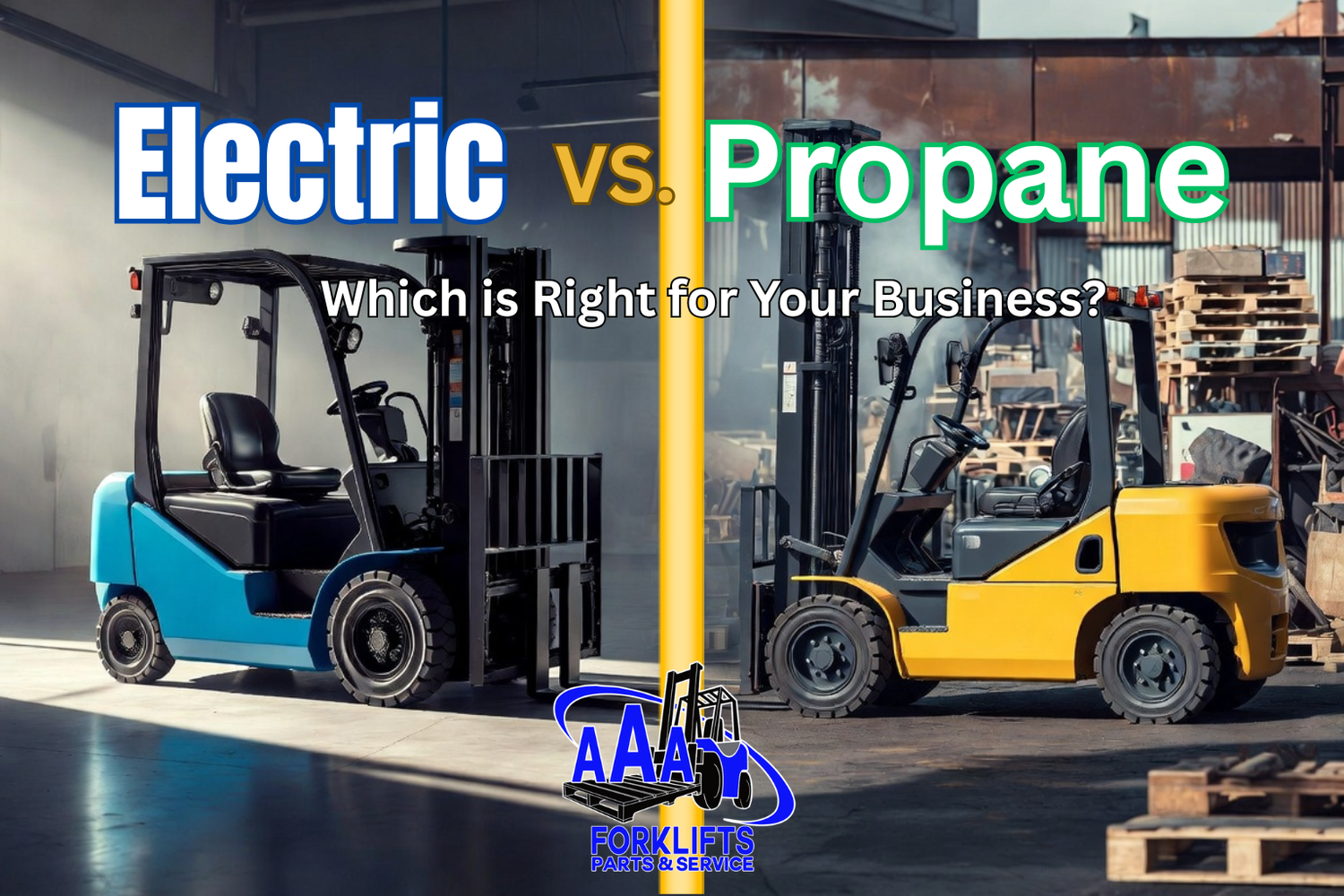
Choosing between an electric forklift and a propane-powered forklift is one of the most important decisions warehouse managers, plant supervisors, and business owners face when investing in material handling equipment. Each power source offers distinct advantages depending on your operational requirements, working environment, and long-term business goals.
Quick Decision Guide:
- Choose electric forklifts for indoor operations, noise-sensitive environments, and long-term cost savings
- Choose propane forklifts for outdoor use, continuous operations, and maximum power requirements
- Consider your facility layout, charging infrastructure, and operational patterns before deciding
Electric Forklift Advantages and Applications
An electric forklift operates using rechargeable battery systems, making it the preferred choice for indoor warehousing, distribution centers, and manufacturing facilities. These units provide clean, quiet operation without exhaust emissions, creating safer working conditions for employees.
Key Benefits of Electric Forklifts
- Zero emissions: No harmful fumes or carbon monoxide, improving air quality and worker safety
- Quiet operation: Significantly reduced noise levels compared to internal combustion engines
- Lower operating costs: Electricity costs less than propane fuel over time
- Reduced maintenance: Fewer moving parts mean less frequent service requirements
- Precise control: Electric motors provide smooth acceleration and precise handling
- Compact design: Often smaller turning radius for tight warehouse aisles
Electric forklifts excel in food processing facilities, pharmaceutical warehouses, retail distribution centers, and any indoor environment where air quality and noise levels matter. Many businesses choose electric models for multi-shift operations where consistent power delivery throughout the work cycle is essential.
Electric Forklift Considerations
While electric forklifts offer numerous advantages, operators must consider charging infrastructure requirements and battery management. Most electric forklifts need 8-12 hours of charging time, which requires planning around shift schedules and may necessitate spare battery investments for continuous operations.
Battery maintenance includes regular watering, cleaning terminals, and monitoring charge cycles to maximize battery life. However, modern lithium-ion batteries are reducing these maintenance requirements significantly compared to traditional lead-acid systems.
Propane Forklift Advantages and Applications
Propane forklifts use liquid propane (LP) gas to power internal combustion engines, delivering consistent power output and quick refueling capabilities. These units are particularly effective for outdoor applications, heavy-duty operations, and businesses requiring continuous uptime without charging downtime.
Key Benefits of Propane Forklifts
- Consistent power: Maintains full power throughout the tank duration
- Quick refueling: Tank changes take minutes, not hours like battery charging
- Weather resistance: Performs reliably in cold temperatures and outdoor conditions
- Higher lifting capacity: Generally offers more power for heavy-duty applications
- Lower upfront costs: Initial purchase price typically lower than electric equivalents
- No charging infrastructure: No need for charging stations or electrical upgrades
Construction sites, lumber yards, outdoor storage facilities, and operations requiring maximum power output often prefer propane forklifts. The ability to operate continuously with quick tank swaps makes them ideal for demanding applications where downtime costs are significant.
AAA Forklifts Service Advantage
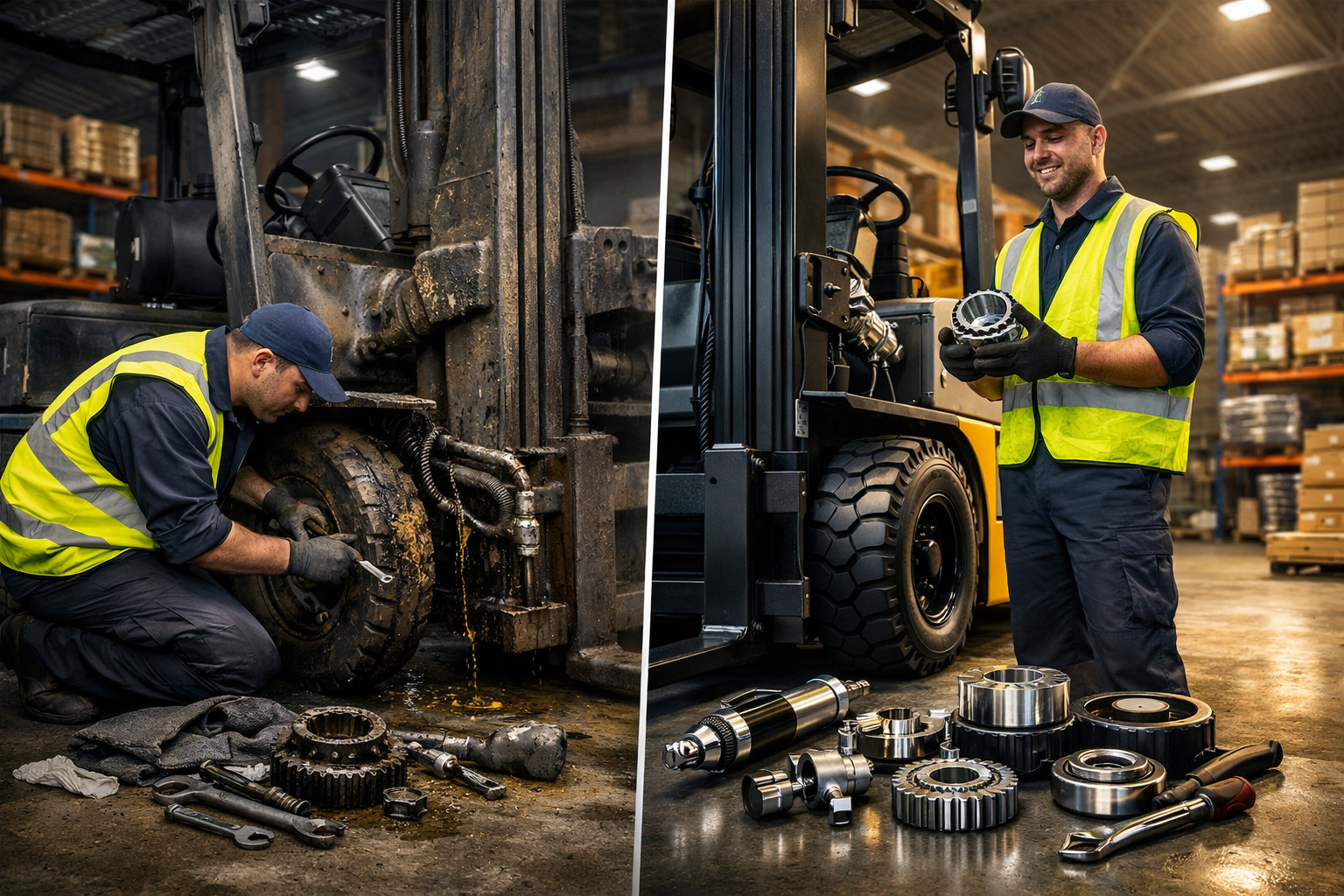
Whether you choose electric or propane forklifts, proper maintenance is critical for maximizing uptime and equipment life. AAA Forklifts provides comprehensive planned maintenance services for both power types, helping Florida and North Carolina businesses minimize unexpected breakdowns and reduce total cost of ownership.
Our certified technicians understand the unique service requirements of electric battery systems, propane fuel systems, and hydraulic components across all major forklift brands.
Cost Analysis: Electric vs. Propane Forklifts
Understanding the total cost of ownership requires analyzing upfront purchase prices, fuel or electricity costs, maintenance expenses, and productivity impacts over the equipment's operational life.
Initial Investment Comparison
Propane forklifts typically have lower initial purchase prices, but electric forklifts may qualify for energy efficiency incentives or tax credits depending on your location and business structure. Electric models also require charging equipment investment, which can add several thousand dollars to the initial setup cost.
However, financing options and forklift rental programs can help businesses access either power type without large upfront capital requirements, allowing you to test different options before making long-term commitments.
Operating Cost Breakdown
Electric Forklift Operating Costs:
- Electricity: $0.10-$0.15 per hour of operation
- Battery replacement: $3,000-$6,000 every 5-7 years
- Lower maintenance costs due to fewer moving parts
Propane Forklift Operating Costs:
- Propane fuel: $0.25-$0.40 per hour of operation
- Regular engine maintenance: oil changes, filters, spark plugs
- Higher service frequency for internal combustion components
Over a 5-year period, electric forklifts often provide lower total operating costs despite higher initial investment, particularly in high-usage applications. The exact savings depend on local electricity rates, propane pricing, and operational intensity.
Operational Considerations for Your Business
The right forklift choice depends heavily on your specific operational requirements, facility characteristics, and business priorities. Consider these factors when evaluating electric versus propane options.
Indoor vs. Outdoor Operations
Electric forklifts are mandatory for many indoor applications due to emission regulations and air quality requirements. Food processing, pharmaceuticals, and enclosed warehouses often require zero-emission equipment to maintain product quality and worker safety standards.
Propane forklifts work well in outdoor applications where ventilation is not a concern and weather conditions might affect electric battery performance. Construction sites, lumber yards, and outdoor storage facilities often prefer propane for its reliability in various weather conditions.
Shift Patterns and Usage Intensity
Single-shift operations often favor electric forklifts because overnight charging fits naturally into the work schedule. Multi-shift operations may require spare batteries or fast-charging systems to maintain productivity.
Continuous 24/7 operations might prefer propane forklifts for their quick refueling capability, though multiple battery systems can also support round-the-clock electric forklift operations with proper planning.
Decision Checklist for Your Business
- Evaluate your facility ventilation and indoor air quality requirements
- Calculate total cost of ownership over 5-7 years including fuel, maintenance, and productivity
- Assess your electrical infrastructure and charging station requirements
- Consider noise restrictions and worker comfort preferences
- Analyze your shift patterns and uptime requirements
- Review local incentives for electric equipment purchases
- Factor in operator training requirements for different power systems
Maintenance and Service Requirements
Both electric and propane forklifts require regular maintenance to ensure safe operation, maximize uptime, and extend equipment life. Understanding the maintenance differences helps businesses budget appropriately and plan service schedules.
Electric Forklift Maintenance Focus
Electric forklift maintenance centers on battery care, electrical system integrity, and hydraulic components. Battery maintenance includes regular watering (for lead-acid batteries), terminal cleaning, and charge cycle monitoring. Modern lithium-ion batteries reduce these requirements significantly.
Electric motors require minimal maintenance compared to internal combustion engines, focusing primarily on brush replacement and connection inspections. Hydraulic system service remains important for lift and tilt functions regardless of power source.
Propane Forklift Maintenance Requirements
Propane forklifts require traditional internal combustion engine maintenance including regular oil changes, air filter replacement, spark plug service, and cooling system maintenance. The propane fuel system also needs periodic inspection for leaks and proper connections.
Engine maintenance typically occurs more frequently than electric motor service, but many businesses are familiar with internal combustion maintenance procedures from their vehicle fleets. Proper maintenance scheduling prevents costly breakdowns and maintains optimal performance.
Frequently Asked Questions
How long do electric forklift batteries last compared to propane tank usage?
Can electric forklifts work in cold storage or freezer applications?
Which type requires more operator training?
What are the environmental differences between electric and propane forklifts?
Can I convert my propane forklift to electric or vice versa?
How do I calculate the total cost of ownership for electric vs. propane forklifts?
Need Help From AAA Forklifts?
Whether you need forklift service, hydraulic repair, preventive maintenance, rentals, parts support, or help choosing the right equipment, AAA Forklifts helps businesses in Florida and North Carolina stay productive and reduce downtime.
Call Orlando at (407) 695-4387 or Raleigh at (919) 925-2217.

Deja un comentario
Este sitio está protegido por hCaptcha y se aplican la Política de privacidad de hCaptcha y los Términos del servicio.